
Wednesday, August 7, 2013
انگریزوں کی باقیات سے آزادی کے لئے جنگ


Tuesday, October 16, 2012
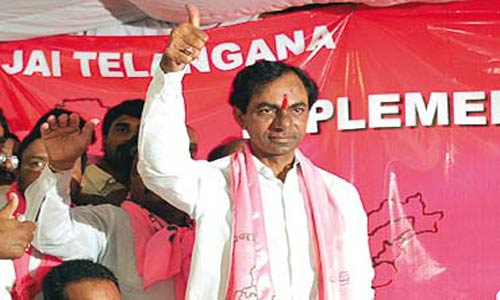
Demand For Telangana Intensifies
Freedom of Expression and Freedom of Action

Monday, October 8, 2012
It’s Green On Blue In Afghanistan

Innocence Of Muslims: Voices Of Sanity And Reason Needed

Prime Minister Admonishes Media

Wednesday, August 8, 2012
Al-Hilal Celebrates 100TH Year
Has the RSS Put Aside Hindutva?
With the changing time the Rashtriya Swayamsevak Sangh has also changed itself. Materialism has affected the sincerity of this organization too, points out the writer.
Rashtriya Swayamsevak Sangh (RSS) was founded by Maharashtra’s famous Brahmin Dr. Keshav Baliram Hedgewar in 1925. The foundation was laid when the sun of British Empire seemed to be setting. At that time the question as to whom the British would hand over the reins of India was being asked. The effort to restore the Mughal Empire in 1857 was sent in exile to Rangoon where it slept forever. The basic features of Gandhi’s Congress too were not evident. In this situation some planned to transform India into a Hindu Rashtra after freedom. They were the people who like Hitler’s Nazi party believed in supremacy of Aryans over other communities. Their symbol too was that of the Nazi’s: Swastika. Then the slogan “Hindu, Hindi, Hindustan” was invented that defines itself. Interestingly none of the three words has its origin in Sanskrit or any other Indian language. They are Urdu words and are borrowed in Urdu from Arabic. These words are still used in Arabic dictionaries. The word Hind relates to black or dark brown. Like in India black or brown skinned babies are named Shyam, Shyama or Rajni, in Arabia they are named Hind, Hinda or Laila. So, Hind and Hanadi are still popular names among Arabs. In fact, this could be a topic of research whether RSS founders knew they were Arabic words or they had simply imagined that many would not realize it. Anyway, RSS came into existence and started working under the philosophy that is today known as Hindutva.
After its involvement in Gandhi’s murder it was impossible for RSS to transform into a political organization. It confined itself to a cultural organization.
After many years of independence Shyam Prasad Mukherjee resigned from Nehru cabinet and floated Jan Sangh Party. RSS volunteers joined the party in folks. Jan Sangh undoubtedly was a political party but it was greatly influenced by the RSS philosophy “Hindu, Hindi, Hindustan”. Jan Sangh traversed a long journey to become Bharatiya Janata Party. The BJP, despite its claims of being a public party, could never detach itself from Hindutva philosophy. Its main philosophy remained unchanged.
Change began when under veteran leader Atal Bihari Vajpayee a coalition government was formed in centre. After assuming power it dawned upon BJP leaders that to stay in power and win elections they needed wealth more than popularity and high moral values. This was the beginning of game. Late Pramod Mahajan emerged as its most expert player.
In this article, however, we do not intend to analyze change in the BJP. Instead, we want to unveil the secret that this trend is not limited to BJP. The circumstances suggest that this change has engulfed also RSS. This has been revealed not by any anti-RSS political leader or journalist. Rather it was revealed by Anand Moonje in an interview to an English weekly. Anand is grandson of DR. B.S. Moonje, who is among the founding members of Hindu Mahasabha. Anand also disclosed that this change to the RSS was introduced by very late Pramod Mahajan. Mahajan was a known RSS member and dear to Sangh.
Before that, RSS would be an organization of the volunteers leading simple life away from worldly pleasure. They would wear khaki chaddi, white shirt & black cap and carried a stick in their hands. Most of them did not even marry. There was common perception about Swayamsevaks that they did dream of Hindu Raj but they did not long for wealth or power. Even those who opposed their philosophy would appreciate their simple life. Changes occurred when the BJP ascended to rule in many states and then in the centre. At this point, the RSS started penetrating its men in the government hoping that it would not let the BJP governments deviate from the path of Hindutva.
But after testing power, the mouth taste of the volunteers also changed. Pramod Mahajan told the Swayamsevaks that philosophy and rules aside, there could be no work without money. RSS was indeed an inflectional organization but it was not a wealthy. It had great influence over bureaucracy and a reference to RSS would do in favour of the aspirants. But when multi-national companies flooded India the volunteers lost interest in becoming a Swayamsevak and wielding lathi in encroaching sun. They though it to be a wastage of time. Now, the youth did not look for government jobs. They preferred jobs in multi-national corporations. According to an estimate, during the last ten years enrolment for RSS declined by 42%. By the time RSS, however, had spread its network to a large area. There it required money. As Anand Moonje would put it, this problem was solved by Pramod Mahajan. Then everyone could see the change.
The present scenario is that a leader as sincere and devote to Hindutva philosophy as Lal Krishna Advani is ignored, the faithful Swayamsevak like Sanjay Joshi is sidelined and bounties rain on Narendra Modi. Because Modi has power and he has control over large resources of wealth. This is despite that Modi does not care for RSS leaders.
One more example in this context is that of Karnataka Chief Minister Jagadish Shettar. The relation of Shettar with illegal mining mafia is an open secret. Yet, RSS helped him to become CM saying that he is an old Swayamsevak.
Old Swayamsevaks say that the BJP had a reason not to always abide by the Hindutva philosophy. According to the BJP leaders, they have to collaborate with the political parties that do not believe in Hindutva philosophy because they have to run NDA in the centre.
But the reason why RSS is putting aside its philosophy is beyond perception. The Hindutva was its main aim. One of reasons may be that RSS is now bereft of the likes of Nanaji Deshmukh who spent his entire life in social service, who never ever knocked the door of power and who during his last days too continued working for public welfare from an Ashram in Gorakhpur.
Today, those running RSS are not that committed nor are they averse to woman, wealth and power. Add to this the fact that unlike in the earlier days the devout and sincere Swayamsevaks are discouraged. The example of Sanjay Joshi is before us. On Modi’s wish he was sacked from the BJP and humiliated. RSS did not do anything except a light agitation. Perhaps, gone are the days when RSS would challenge ‘disobedient’ ones like Modi. As a result, the oral claim by the RSS that it still abides by the commitment to establish Hindu Rashtra is not convincing for many. A common perception has emerged that now RSS is not an organization of Hedgewar, Golwalkar and Sudarshan, but it is an organization of Swayamsevaks who have succumbed to worldly pleasures.
By Hasan Kamal
hasankamal100@gmail.com
The Muslim Convention Of JD(S)
Media And Sexual Exploitation Of Women
Wednesday, March 7, 2012
Media Made Terror Groups
Prejudice and double standard were all evident in the mainstream media when it reported two recent incidents; regime change in the neighbouring country of Maldives and attack on the Israeli diplomats car in New Delhi.
* As the result of the change in government of Maldives, its first democratically elected president Mohammad Nasheed tendered his resignation on February 7 amidst public protests later joined by the police and a section of the army. He has been replaced by his vice president Mohammed Waheed Hassan.
The protests erupted after Nasheed ordered the military to arrest Abdulla Mohamed, the chief judge of the Criminal Court accusing him of political bias and corruption. The judge had ordered the release of a government critic he said had been illegally detained. The vice president, Supreme Court, Human Rights Commission, Judicial Services Commission and the office of the United Nations High Commissioner for Human Rights all called for Mohamed to be released.
With an estimated population of 3,28,536 Maldives is a small Islamic country. It would not pose a threat to Indian security, according to the media, even though one of the terrorists responsible for Mumbai attack is said to be Maldivian. But the current regime change in the country is portrayed as the result of rise of Islamism in it. Islam is a peaceful religion and if any radical Islam—a vague term that should mean Islam in its original shape without any manmade addition or deletion—spreads in any country it does not pose security threat to other countries. But a media that always sees Islam negatively does not believe so.
A report in the respected daily Times Of India “Rise of Islamism in Maldives a cause of worry for India” is adamant to declare that Maldives has been dominated by radical Islamists and that this could pose a serious danger to India.
“The growth of Islamic radicalism in Maldives can be traced to the beginning of the last decade. Like in Bangladesh, Pakistani jihadi groups like Lashkar-e-Taiba have been making inroads to indoctrinate young men in a conservative Sunni society, that has been bogged down with slow growth, political authoritarianism (until 2008, certainly) and mushrooming madrassas with Arab funds...Most of the Islamic ideology in Maldives is Ahle-Hadith, which is also the school followed by LeT. But Salafist ideologies are now also evident. Nasheed tried to make a deal with them and even had the Adhaalat Party, the Islamist party, as part of his coalition. In his interview with TOI, the new president Mohamed Waheed said, “Our view is the best way of dealing with Islamist ideology is to engage with them and work with them. That, we believe is the right and democratic way to go about it.”
The report adds, “Maldives is particularly crucial because its geographical position situates it right in the middle of major sea routes in the Indian Ocean. But equally, a radicalized section of the tiny population of Maldives could make it so much easier for the ISI-Lashkar combine to use them as a staging ground for terror attacks against India.” The newspaper, however, does not make clear as to how the perceived ISI-Lashkar attacks would be the result of radical Islam. Islam does not teach terrorism.
* The double standard of the media is explicit from the fact that while it ignored the continuous murders of Palestinians by Israel, it created such a hue and cry when an Israeli was injured in Delhi as if the sky had fallen on the earth. Of course, the blood whether of an Israeli or a Palestinian should be given the same respect and anyone shedding it must be condemned and brought to book.
Again in a story related to the attack the TOI exhibits its bias towards Islam.
Out of the wreckages of the attack it again came out with a new kind of threat posed by Islam; that is Sunni Deobandi terrorism. Until now people were aware of Islamic Terrorism; a term widely opposed by the Islamic scholars. Some years back the world hailed the largest Sunni Islamic seminary in Asia, Dar-ul-Uloom at Deoband when its scholars openly condemned any form of terrorism as un-Islamic.
In a report Israeli Establishments In India On Terror Radar the paper unlike in the report above wherein it called LeT the follower of the ideology of Ahle-Hadith it now calls the terror outfit as a Sunni Deobandi group. And so, “Mondays attack on an Israeli diplomat, seen to be sponsored by Iranian groups, adds a new dimension to the threat posed by Sunni Deobandi groups like Lashkar.”
This is but an Islamophobic propaganda emanating out of bias towards the religion, for many reasons. This must be stopped in the interest of peaceful coexistence. The media will lose the hold it has on readers if it continues with its own whims and fancies. Already most of the media reports are not taken seriously anymore. People have begun to read between the lines and belief in printed news is diminishing.
By A H Y
* As the result of the change in government of Maldives, its first democratically elected president Mohammad Nasheed tendered his resignation on February 7 amidst public protests later joined by the police and a section of the army. He has been replaced by his vice president Mohammed Waheed Hassan.
The protests erupted after Nasheed ordered the military to arrest Abdulla Mohamed, the chief judge of the Criminal Court accusing him of political bias and corruption. The judge had ordered the release of a government critic he said had been illegally detained. The vice president, Supreme Court, Human Rights Commission, Judicial Services Commission and the office of the United Nations High Commissioner for Human Rights all called for Mohamed to be released.
With an estimated population of 3,28,536 Maldives is a small Islamic country. It would not pose a threat to Indian security, according to the media, even though one of the terrorists responsible for Mumbai attack is said to be Maldivian. But the current regime change in the country is portrayed as the result of rise of Islamism in it. Islam is a peaceful religion and if any radical Islam—a vague term that should mean Islam in its original shape without any manmade addition or deletion—spreads in any country it does not pose security threat to other countries. But a media that always sees Islam negatively does not believe so.
A report in the respected daily Times Of India “Rise of Islamism in Maldives a cause of worry for India” is adamant to declare that Maldives has been dominated by radical Islamists and that this could pose a serious danger to India.
“The growth of Islamic radicalism in Maldives can be traced to the beginning of the last decade. Like in Bangladesh, Pakistani jihadi groups like Lashkar-e-Taiba have been making inroads to indoctrinate young men in a conservative Sunni society, that has been bogged down with slow growth, political authoritarianism (until 2008, certainly) and mushrooming madrassas with Arab funds...Most of the Islamic ideology in Maldives is Ahle-Hadith, which is also the school followed by LeT. But Salafist ideologies are now also evident. Nasheed tried to make a deal with them and even had the Adhaalat Party, the Islamist party, as part of his coalition. In his interview with TOI, the new president Mohamed Waheed said, “Our view is the best way of dealing with Islamist ideology is to engage with them and work with them. That, we believe is the right and democratic way to go about it.”
The report adds, “Maldives is particularly crucial because its geographical position situates it right in the middle of major sea routes in the Indian Ocean. But equally, a radicalized section of the tiny population of Maldives could make it so much easier for the ISI-Lashkar combine to use them as a staging ground for terror attacks against India.” The newspaper, however, does not make clear as to how the perceived ISI-Lashkar attacks would be the result of radical Islam. Islam does not teach terrorism.
* The double standard of the media is explicit from the fact that while it ignored the continuous murders of Palestinians by Israel, it created such a hue and cry when an Israeli was injured in Delhi as if the sky had fallen on the earth. Of course, the blood whether of an Israeli or a Palestinian should be given the same respect and anyone shedding it must be condemned and brought to book.
Again in a story related to the attack the TOI exhibits its bias towards Islam.
Out of the wreckages of the attack it again came out with a new kind of threat posed by Islam; that is Sunni Deobandi terrorism. Until now people were aware of Islamic Terrorism; a term widely opposed by the Islamic scholars. Some years back the world hailed the largest Sunni Islamic seminary in Asia, Dar-ul-Uloom at Deoband when its scholars openly condemned any form of terrorism as un-Islamic.
In a report Israeli Establishments In India On Terror Radar the paper unlike in the report above wherein it called LeT the follower of the ideology of Ahle-Hadith it now calls the terror outfit as a Sunni Deobandi group. And so, “Mondays attack on an Israeli diplomat, seen to be sponsored by Iranian groups, adds a new dimension to the threat posed by Sunni Deobandi groups like Lashkar.”
This is but an Islamophobic propaganda emanating out of bias towards the religion, for many reasons. This must be stopped in the interest of peaceful coexistence. The media will lose the hold it has on readers if it continues with its own whims and fancies. Already most of the media reports are not taken seriously anymore. People have begun to read between the lines and belief in printed news is diminishing.
By A H Y
Friday, September 2, 2011
The Cost Of War
The economy of the United States and the European giants like France, United Kingdom and Italy is going through tough times. Analysts predict the next few years will mark the end of European and American supremacy in the world.
The experts believe if there is no immediate stability soon the increasing unemployment frustration may lead to civil war in the U.S.
A few weeks back poverty struck and deprived citizens of once Great Britain came on the streets creating mayhem throughout London and in other cities. Suffering from unemployment the citizens of the country, which was famous for its dignified public behavior, resorted to looting and arson. All communities were involved in this show of frustration.
Italy has adopted a tough new austerity package hoping it would help tackle the huge public debt and balance its budget.
And a debt crisis is waiting to engulf France.
Israel has also seen anti-establishment demonstrations over the past few days over rising prices. The demonstrations were first of their kind when the number are considered—sometimes 3,00,000 of an estimated total 58,18,200 of the population.
Among many reasons for economic instability America, Britain, France, Italy and Israel are facing is their excessive involvement in war. Instead of investing the asset of public taxes into profitable business or public welfare schemes they have diverted a considerable chunk of the taxes in endless wars.
From Iraq to Afghanistan to Libya they not only sacrificed their men for nothing but also squandered state wealth for no good. The all time engagement of Israel with Palestine and the neighboring Arab countries is now showing in economic hardship.
The natural outcome of this war mania is the current situation in these regions. They are reeling under debt, their people are turning against them, and the peace in their society is becoming harder to keep as the days pass.
The experts believe if there is no immediate stability soon the increasing unemployment frustration may lead to civil war in the U.S.
A few weeks back poverty struck and deprived citizens of once Great Britain came on the streets creating mayhem throughout London and in other cities. Suffering from unemployment the citizens of the country, which was famous for its dignified public behavior, resorted to looting and arson. All communities were involved in this show of frustration.
Italy has adopted a tough new austerity package hoping it would help tackle the huge public debt and balance its budget.
And a debt crisis is waiting to engulf France.
Israel has also seen anti-establishment demonstrations over the past few days over rising prices. The demonstrations were first of their kind when the number are considered—sometimes 3,00,000 of an estimated total 58,18,200 of the population.
Among many reasons for economic instability America, Britain, France, Italy and Israel are facing is their excessive involvement in war. Instead of investing the asset of public taxes into profitable business or public welfare schemes they have diverted a considerable chunk of the taxes in endless wars.
From Iraq to Afghanistan to Libya they not only sacrificed their men for nothing but also squandered state wealth for no good. The all time engagement of Israel with Palestine and the neighboring Arab countries is now showing in economic hardship.
The natural outcome of this war mania is the current situation in these regions. They are reeling under debt, their people are turning against them, and the peace in their society is becoming harder to keep as the days pass.
Media And Irresponsibility
Media is the fourth pillar of our democracy. As a mature democracy India gives complete freedom to the media. The media was supposed to fearlessly and independently publish news that is unbiased. It was supposed to criticize government policy, be the means of reaching public grievance to the government, raise a voice when public interests had been disregarded when policies were formulated, etc. A job for the ethical.
Though media had to go through a turbulent time during the 1975 emergency, it managed to survive. When the going got tough the tough got going. Prime Minister Indira Gandhi and her son Sanjay Gandhi tried to suffocate independent media but they failed due to the brave men who ran the media. The atrocities of those times are recorded only due the work of the media. The media kept the democracy alive. As a result the Congress faced a humiliating defeat in 1977.
With the advancement of the time media has grown in strength. The monopoly of the government over the news broadcasting has ended and there are hundreds of TV channels and radio stations providing minute-to-minute updates to the audience. The industrialization and commercialization of the media and the resulted competition have extended its scope.
There has been an addition in a kind of “investigative journalism”. True to its name this has successfully unearthed many scandals and several people involved in these. For the government institutions assigned to check irregularities this would have been an uphill task. This journalism sometimes is ahead of the investigating agencies too. But there are the occasions when investigative journalism has influenced public opinion even before there was any evidence.
In electronic media, TV news channels are the most popular. Most of the channels are run by big corporate houses that naturally have business interests.
Consider the role played by the media after it has managed to expose any scandal; it now behaves as an investigating agency, presents its case as a prosecutor and the gullible viewer passes his judgment based on the one sided argument. Does this not affect the trial of the accused? The story forgotten and the next one is being prepared. The verdict of the media is passed. The verdict by the honorable courts will come later.
The media is expected to, at least, not do a TV trial of a sub judice case. The court should freely hear a case without external or public pressure. This is impossible in a case under media trial. Is this not Contempt of court?
Presumably our electronic media, after any incident of public outrage, construct a narrative that soon turns out to be completely bogus. Of late, its always the case that within hours of a blast the media starts mouthing terms like Huji, Let, IM and SIMI. As it turned out the media just made up its mind about who’ve done it.
Stereotypes shown by the popular media is polarizing society. Unknowingly, the electronic media is fuelling the agenda of forces who will eventually destabilize the country.
By A H Y
Though media had to go through a turbulent time during the 1975 emergency, it managed to survive. When the going got tough the tough got going. Prime Minister Indira Gandhi and her son Sanjay Gandhi tried to suffocate independent media but they failed due to the brave men who ran the media. The atrocities of those times are recorded only due the work of the media. The media kept the democracy alive. As a result the Congress faced a humiliating defeat in 1977.
With the advancement of the time media has grown in strength. The monopoly of the government over the news broadcasting has ended and there are hundreds of TV channels and radio stations providing minute-to-minute updates to the audience. The industrialization and commercialization of the media and the resulted competition have extended its scope.
There has been an addition in a kind of “investigative journalism”. True to its name this has successfully unearthed many scandals and several people involved in these. For the government institutions assigned to check irregularities this would have been an uphill task. This journalism sometimes is ahead of the investigating agencies too. But there are the occasions when investigative journalism has influenced public opinion even before there was any evidence.
In electronic media, TV news channels are the most popular. Most of the channels are run by big corporate houses that naturally have business interests.
Consider the role played by the media after it has managed to expose any scandal; it now behaves as an investigating agency, presents its case as a prosecutor and the gullible viewer passes his judgment based on the one sided argument. Does this not affect the trial of the accused? The story forgotten and the next one is being prepared. The verdict of the media is passed. The verdict by the honorable courts will come later.
The media is expected to, at least, not do a TV trial of a sub judice case. The court should freely hear a case without external or public pressure. This is impossible in a case under media trial. Is this not Contempt of court?
Presumably our electronic media, after any incident of public outrage, construct a narrative that soon turns out to be completely bogus. Of late, its always the case that within hours of a blast the media starts mouthing terms like Huji, Let, IM and SIMI. As it turned out the media just made up its mind about who’ve done it.
Stereotypes shown by the popular media is polarizing society. Unknowingly, the electronic media is fuelling the agenda of forces who will eventually destabilize the country.
By A H Y
Tuesday, August 9, 2011
Rahul’s Gandhigiri For Dalits
Rahul Gandhi was quick to launch a padyatra for farmers whom he feels have been exploited by the UP government (state elections in 2012). But why did he not show this enthusiasm when it came to the victims of Forbesganj firing in Bihar. He remained silent when Muslims’ patience was put to test when police desecrated the Holy Qur’an in Moradabad in UP. Can he be called a national leader when he is behaving like a district level politician?
At a tea stall in a remote village of India politics were being discussed. Bholu Ram summed up what many intellectuals fail to understand. The discussion was about rajneeti of Bharat and being discussed was the bachelor Rahul Baba and his ‘kisan padyatra’ in Uttar Pradesh.
“If he (Rahul) stays at a Dalit’s house, he will get him sympathy of the Dalits (which for now is totally for Mayawati, the CM of UP). Tell me what a visit to a Muslims house will get him?” Bholu Ram tapped his left thigh with his right hand indicatingly.
Rahul Gandhi visited the farmers of Bhatta-Parsaul (some of whom lost their dear ones to the bullets of UP police and others lost their lands to what is called public interest; Yamuna Expressway), sat on dharna for them and even started a padyatra for their cause. I wonder why he did not attend the Muslim family that lost its son in the brutal police firing in Moradabad. Why he ignored the Muslim community the sentiments of which were hurt by the UP police when it desecrated the Holy Qur’an. And why he paid just a political visit to the victims of brutal police firing in Forbesganj?
Defying Hindu tradition of upper caste members considering the lower caste people as untouchable the Brahmin Rahul Gandhi has earned name and fame for his apparent good conduct with the Dalits of Uttar Pradesh (It should be seen in the background that the state is going to witness a general assembly elections in 2012 and the position of Congress is abysmal in the state as the Dalit leader Mayawati enjoys dominance). There have been times when Rahul spent a night with a Dalit family and took food with them. Most recently the media found in him the spirit of Mahatma Gandhi reinstated when Mr. Rahul devoted some o time to the farmers in UP who fell victim to the land acquisition for Yamuna Expressway.
The Muslim community, however, could not get due attention from Rahul, the prospective Prime Minister of India, though in every aspect of life it is being neglected by the government. Rather, sometimes Mr. Rahul has been found playing jokes with the community’s sentiments. What else should we call it that instead of extending help to Muslims to get back their Babri Masjid, Rahul asks them to forget it and concentrate on the issues that he says are more important than this. Of course, infrastructure, education and technology are more important. But giving into the demands of the terrorists who saw the seeds of communalism in India by demolishing Babri Masjid is akin to giving a free license to them for going on rampage at their will.
Because of the Muslims’ consistent attachment with the Congress for its claimed secularism, the Congress takes them as a permanent vote bank that does not require any appeasement through practical measures for their welfare. It is well aware that once the fear of communal elements becoming the ruler either in the centre or the states is inspired in Muslims they automatically turn to the Congress that claims practicing secularism. So whether it is the case of Moradabad police misconduct with Muslims or the brutal murder of the minorities in Forbesganj (Bihar) firing by police, nowhere Rahul Gandhi of Bhatta-Parsaul is seen.
One Syed A. Ali commented about Forbesganj firing, “Where is Rahul Gandhi now? In Bhatta-Parsaul, UP, he went there on motor cycle even when police had blocked the entry point of the village. Now this brutality of Bihar Police and Nitish government has left Bhatta-Parsaul incident behind but no Congress leader is there, because there is no use for congress leaders as no elections are due in near future there. It’s SHAME for the country.” It should be noted that it took Mr. Rahul one month to visit the Forbesganj firing victims. Until then he was busy with the farmers of Bhatta-Parsaul.
Like the electronic and print media that gets no interest in cases related to Muslims Mr. Gandhi too does not think them attention worthy. During the UPA-1 Muslims witnessed that Congress did something for them. Whether it is the formation of the Sachar Committee to find out the social, economic and educational status of Muslims and come up with suggestions and solutions to include them in the mainstream or the promise of the Andhra Pradesh CM from Congress late YSR Reddy to give 4% reservations for Muslims in Andhra Pradesh. But in the UPA-11 when Rahul Gandhi emerged as an influential figure in the party cadre no mention worthy steps for the Muslims have been taken by the UPA.
It is difficult to produce any justification for his silence over the Moradabad desecration of the Holy Qur’an except that to speak about it won’t bring any political benefit to him or the Congress. So why to face the blame of minority appeasement?
In Moradabad, the dirty mentality of the police was seen when it disgraced the Holy Qur’an. The police that failed to search an accused of teasing a girl vented its anger on a Muslim girl and the Qur’an she was reciting. In the subsequent agitation against the police misconduct one person had to lose his life. This shameful act of the police playing with religious sentiments of the minorities drew sharp condemnation from every quarter. Muslims expect that Mr. Rahul sat on dharna or started a padyatra demanding that the culprit policemen are brought to book and that no further incidents of such a nature takes place.
The incident in Moradabad is reminiscent of 80s communal riots when the Congress was in Centre and also Chief Minister was from the Congress. The victims of Meerut, Moradabad and Hashimpura anti-Muslim massacre could get nothing but lip service. The governments changed in the state and also in the centre but the culprit police and the communal elements did not get their due.
“The steps of Rahul Gandhi in UP have brought back live the memories of communal victimization of Muslims during his father’s days when Congress Chief Minister V.P. Singh’s PAC ordered shoot out of Muslims on Buta Singh’s orders. Meerut and Maliana I cannot erase them from my memory even after more than two decades of the barbaric tragedy. Why Rahul Gandhi chose to keep Silent on atrocities on Muslims of Moradabad is puzzling,” writes Ahmed Sohail Siddiqui who runs a news portal.
Going back to the question of Jumman, a practical reply is needed as to why Rahul did not attend the Muslim victims in Moradabad and why he paid just a formal visit to Forbesganj. Jumman is not alone in his thought. Rather the majority of the Muslim community thinks on this line even since independence. Long has been but the community could not come out of the ambit of thinking to take some practical steps that ensures it no longer is ignored by the political parties and their voices are heard and concerns taken care.
By A. Hameed Yousuf
ahameed12@gmail.com
At a tea stall in a remote village of India politics were being discussed. Bholu Ram summed up what many intellectuals fail to understand. The discussion was about rajneeti of Bharat and being discussed was the bachelor Rahul Baba and his ‘kisan padyatra’ in Uttar Pradesh.
“If he (Rahul) stays at a Dalit’s house, he will get him sympathy of the Dalits (which for now is totally for Mayawati, the CM of UP). Tell me what a visit to a Muslims house will get him?” Bholu Ram tapped his left thigh with his right hand indicatingly.
Rahul Gandhi visited the farmers of Bhatta-Parsaul (some of whom lost their dear ones to the bullets of UP police and others lost their lands to what is called public interest; Yamuna Expressway), sat on dharna for them and even started a padyatra for their cause. I wonder why he did not attend the Muslim family that lost its son in the brutal police firing in Moradabad. Why he ignored the Muslim community the sentiments of which were hurt by the UP police when it desecrated the Holy Qur’an. And why he paid just a political visit to the victims of brutal police firing in Forbesganj?
Defying Hindu tradition of upper caste members considering the lower caste people as untouchable the Brahmin Rahul Gandhi has earned name and fame for his apparent good conduct with the Dalits of Uttar Pradesh (It should be seen in the background that the state is going to witness a general assembly elections in 2012 and the position of Congress is abysmal in the state as the Dalit leader Mayawati enjoys dominance). There have been times when Rahul spent a night with a Dalit family and took food with them. Most recently the media found in him the spirit of Mahatma Gandhi reinstated when Mr. Rahul devoted some o time to the farmers in UP who fell victim to the land acquisition for Yamuna Expressway.
The Muslim community, however, could not get due attention from Rahul, the prospective Prime Minister of India, though in every aspect of life it is being neglected by the government. Rather, sometimes Mr. Rahul has been found playing jokes with the community’s sentiments. What else should we call it that instead of extending help to Muslims to get back their Babri Masjid, Rahul asks them to forget it and concentrate on the issues that he says are more important than this. Of course, infrastructure, education and technology are more important. But giving into the demands of the terrorists who saw the seeds of communalism in India by demolishing Babri Masjid is akin to giving a free license to them for going on rampage at their will.
Because of the Muslims’ consistent attachment with the Congress for its claimed secularism, the Congress takes them as a permanent vote bank that does not require any appeasement through practical measures for their welfare. It is well aware that once the fear of communal elements becoming the ruler either in the centre or the states is inspired in Muslims they automatically turn to the Congress that claims practicing secularism. So whether it is the case of Moradabad police misconduct with Muslims or the brutal murder of the minorities in Forbesganj (Bihar) firing by police, nowhere Rahul Gandhi of Bhatta-Parsaul is seen.
One Syed A. Ali commented about Forbesganj firing, “Where is Rahul Gandhi now? In Bhatta-Parsaul, UP, he went there on motor cycle even when police had blocked the entry point of the village. Now this brutality of Bihar Police and Nitish government has left Bhatta-Parsaul incident behind but no Congress leader is there, because there is no use for congress leaders as no elections are due in near future there. It’s SHAME for the country.” It should be noted that it took Mr. Rahul one month to visit the Forbesganj firing victims. Until then he was busy with the farmers of Bhatta-Parsaul.
Like the electronic and print media that gets no interest in cases related to Muslims Mr. Gandhi too does not think them attention worthy. During the UPA-1 Muslims witnessed that Congress did something for them. Whether it is the formation of the Sachar Committee to find out the social, economic and educational status of Muslims and come up with suggestions and solutions to include them in the mainstream or the promise of the Andhra Pradesh CM from Congress late YSR Reddy to give 4% reservations for Muslims in Andhra Pradesh. But in the UPA-11 when Rahul Gandhi emerged as an influential figure in the party cadre no mention worthy steps for the Muslims have been taken by the UPA.
It is difficult to produce any justification for his silence over the Moradabad desecration of the Holy Qur’an except that to speak about it won’t bring any political benefit to him or the Congress. So why to face the blame of minority appeasement?
In Moradabad, the dirty mentality of the police was seen when it disgraced the Holy Qur’an. The police that failed to search an accused of teasing a girl vented its anger on a Muslim girl and the Qur’an she was reciting. In the subsequent agitation against the police misconduct one person had to lose his life. This shameful act of the police playing with religious sentiments of the minorities drew sharp condemnation from every quarter. Muslims expect that Mr. Rahul sat on dharna or started a padyatra demanding that the culprit policemen are brought to book and that no further incidents of such a nature takes place.
The incident in Moradabad is reminiscent of 80s communal riots when the Congress was in Centre and also Chief Minister was from the Congress. The victims of Meerut, Moradabad and Hashimpura anti-Muslim massacre could get nothing but lip service. The governments changed in the state and also in the centre but the culprit police and the communal elements did not get their due.
“The steps of Rahul Gandhi in UP have brought back live the memories of communal victimization of Muslims during his father’s days when Congress Chief Minister V.P. Singh’s PAC ordered shoot out of Muslims on Buta Singh’s orders. Meerut and Maliana I cannot erase them from my memory even after more than two decades of the barbaric tragedy. Why Rahul Gandhi chose to keep Silent on atrocities on Muslims of Moradabad is puzzling,” writes Ahmed Sohail Siddiqui who runs a news portal.
Going back to the question of Jumman, a practical reply is needed as to why Rahul did not attend the Muslim victims in Moradabad and why he paid just a formal visit to Forbesganj. Jumman is not alone in his thought. Rather the majority of the Muslim community thinks on this line even since independence. Long has been but the community could not come out of the ambit of thinking to take some practical steps that ensures it no longer is ignored by the political parties and their voices are heard and concerns taken care.
By A. Hameed Yousuf
ahameed12@gmail.com
Making Of A Bloody Decade
The continuation of the terror strikes in India shows its inability to tackle the menace effectively. Is it because the real perpetrators of the blasts are never caught and get encouragement to carry forward their anti-human agendas?
After making the first decade of the 21ST century a decade of bomb blasts, the terrorists seem to have started the process of making the second decade a copy of that.
The triple serial blasts that rocked the financial capital of India, Mumbai, on July 13 constitute the first major terror strike of the second decade. The blasts that took place during rush hours of the city at Zaveri Bazar, Opera House and Kabutarkhana in Dadar (West) claimed as many as 18 lives and injured 131 innocent citizens.
Prior to the blasts taking place, there have been intelligence inputs appearing in the media that the Al-Qaida-linked terror group HuJI might target the foreign office of Pakistan, its high commission in India and top diplomats if Islamabad does not stop sharing information about it with New Delhi. There were no intelligence inputs that anti-India elements would target any of its cities though.
Whenever there is a terror strike security lapses and intelligence failures are blamed. And the governments both in the Centre and the state promise that no such incidents will take place in future. The Mumbai serial blasts tell a tale of what the ground realities are.
Our security agencies have miserably failed to stop terror strikes. Writes the famous columnist M J Akbar, “One retired police officer who has spent most of his career in intelligence, and retired at the head of his service, told me a simple truth: that the only reason we are not attacked more often is either luck, or that there was no threat.” Commenting on Rahul Gandhi’s take on the Mumbai blast he adds, “Rahul Gandhi repeated — in fact, read out from a piece of paper — the rather facile argument that this attack represented the “1 per cent” that had succeeded rather than the “99 pe cent” who had failed. This is the sort of excuse that cannot survive marginal scrutiny. Where is the evidence of attacks being thwarted? If the police had succeeded in preventing an attack, then they should have a suspect and a story of what had been planned by the suspect. There has been none from the Mumbai police.”
After the Mumbai attack the Union Home Minister Mr. Chidambaram claimed, “There has been no intelligence failure. There was no intelligence warning about 13/7. Intelligence is collected every day, every hour. The blasts are not a failure of intelligence agencies.”
That the terrorists managed to strike at three places at a time and that too in Mumbai without the intelligence sensing this sinister act in itself is a big failure. The citizens who were told post 26/11 that additional security measures have been taken to ensure their safety are questioning what those measures are.
Also the senior BJP leader Arun Jaitley who termed the Mumbai explosions as “an attack on India's security” wondered why the government has failed to stop recurrence of such strikes despite the financial capital being a regular target of terrorists.
“It has become a custom for the terrorists to attack the financial capital of India. The terrorists know that attacking Mumbai would send a strong message across the world,” he said.
Demanding strengthening of the security set up, Mr. Jaitely referred to the announcements made after the 26/11 and wanted to know from the government concrete steps taken so far.
Besides it being a reality that the terrorists take advantage of the security lapses one more reason that the terror strikes could not be contained is that the culprits behind the blasts are left to roam freely. And those who are supposed to be the executors have nothing to do with the blasts. This allows the mischief mongers to create mayhem in the society.
After the Mumbai July 13 blasts the media gave news from the “sources” that it was a handiwork of Muslim named outfits like IM or HuJI. The Chief Minister of Maharashtra Mr. Prithviraj Chavan and the union home minister P. Chidambaram adopted a cautious approach when they stated that it was too early to link any outfit to the blasts.
The media in the past have the record of victimizing Muslim youth in several blasts that in the light of the evidences surfaced later proved to be the handiwork of the Hindutva terrorists. The media feed not only that have its impact on the probing agencies but also on the political leaders as was seen in the German Bakery blast in Pune.
The Maharashtra ATS that investigated the case in the beginning linked it to some outfits with Muslim name. Seeing the IM angle in the blasts the ATS led by Rakesh Maria even arrested one Sammad Bhatkal who was told as having relations with the alleged founders of the IM Iqbal and Riyaz Bhatkal. Then it was turn of Maulana Shabir to face the music. The probing agency termed him as the financer of the blast. But to the embarrassment of the ATS the people of his hometown said that if he had no home of his own, how he could finance the blasts. Then there was the mastermind of the blasts Himayat Baig with the arrest of whose the ATS claimed to have cracked the blast case and it even received tap from the government. The case at last is that Samad has been released on bail as the agency could not link him to the blasts and the whole case has been handed over to the NIA as it remains unsolved.
Ever since the politics of riots was replaced by the politics of bomb blasts the accused behind any blast was a youth who happened to be born in a Muslim family. This instead of becoming an assumption is a fact that could be read in the pages of the history of investigation of the blasts that took place during the last few years.
In the Mumbai blasts too, according to the reports, the ATS along with many others questioned two Muslim youth under detention Mohammed Mobin Khan (32) and his cousin Ayub Raja Shaikh (28). They are alleged IM operatives whom the ATS arrested from suburban Mankhurd as they had allegedly provided vehicles that were used in 2008 serial blasts in Gujarat in which 56 people were killed and over 200 were injured.
Nevertheless, the union home minister Mr. P Chidambaram stated that, “We are not ruling out any angle. We will probe (the involvement of) every terror group...The investigations into the attack will not start on pre-determined assumptions,” he said.
“The man designated to keep Indians safe from terrorists, Home Minister P Chidambaram, who is usually good with words, lost track and traction when he asserted after the Mumbai blasts that as far as suspects go, he was ruling no one out, and ruling no one in either. That probably explains why the Maharashtra police immediately picked up two members of the Indian Mujahideen and seven Naxalites from Mumbai, and 10 Maoists from Pune. They have clearly expanded their circle of the usual suspects,” writes Akbar.
He goes on adding, “The chief minister of Maharashtra Prithviraj Chavan can think of nothing more original than passing the buck. It was his Home Minister R R Patil’s fault, he said, before he did the next thing that politicians are brilliant at: the somersault. Acrobatics cannot explain why the entire police wireless network that evening was jammed, among other things.”
The agencies probing the Mumbai blasts cannot forget that there exists a vast network of the fanatics who have been misusing the name of religion for their nefarious purposes.
They never want that India shares a pleasant relation with the neighbouring Pakistan as the latter is a Muslim-dominated country. Whenever there is a go ahead in peace talks between the two traditionally rival nations, India and Pakistan, a bomb blast comes to halt the process. In this backdrop, the timing of the blasts, days before India starts the foreign minister-level talks with Pakistan, assumes significance. Being asked whether the blasts were an attempt to derail the talks with Pakistan later in July, Mr. Chidambaram said, “I do agree that the Indo-Pak talks will be held this month, in ten days from now. We are not ruling out any angle. We will probe every angle,” he said.
It would have come as an embarrassment to the terrorist that the foreign minister-level talks with Pakistan will take place as scheduled. “They are (on schedule). There is no change in the scheduled visits of (US) secretary (Hillary) Clinton or the foreign minister of Pakistan,” external affairs minister SM Krishna said.
The possibility of saffron terrorism involvement in the blasts cannot be ruled out the senior Congress leader has stated. This is especially when blasts are used for gaining political advantage. In Uttar Pradesh where assembly elections are nearing the right wing Hindutva outfit Vishwa Hindu Parishad has already picked the issue and given it a anti-Muslim colour in a demonstration it recently held in Allahabad. The BJP needed this anti-Muslim oxygen badly to revive its sulking cadre in UP before the UP elections. It can be taken as an indicative that the blasts might have involvement of saffron terror groups who want to revive their hate ideology before the UP elections for better prospects in the elections.
Notable is that in the pre-Swami Aseemanand confession time, the probing agencies would try to solve the blast cases with a pre-determined assumption that it could be done only by Muslim terrorist. When Aseemanand’s conscious urged him to let the truth prevail before the world, it was known that the blasts in Malegaon, Samjhauta Express, Ajmer Dargah and Makkah Masjid were executed by the Hindu fanatics and that the Muslim youth locked behind bars in this connection were actually innocents.
Aseemanand’s confession did not reveal anything new. It only supported the reality the late Maharashtra ATS Chief Hemant Karkare had unraveled after an unbiased probe in the Malegaon blasts that were initially blamed on Muslim youth. Unfortunately for India Hemant Karkare who had hunted big fish of the filthy Hindutva network could not find enough time to destroy it as he was murdered just after big bosses of RSS were found involved in many blasts rocking India. Therefore to not take the confession of Aseemanand as an important clue to crack the network of terrorism on the pretence that his confession was due to duress is not wise. Regrettably after the news surfacing that the Swami’s confession was under duress no headway in the investigation of the blasts is known to public.
On March 11, 2010 the union Home Minister P Chidambaram indicated that seven terror related cases will be investigated by the National Investigation Agency (NIA). These cases include Malegaon bomb blast that took place in the year 2006, Samjhauta Express blast in 2007, Makkah Masjid blast in 2007, Ajmer Sharif blast in 2007, Malegaon blast in 2008, Modasa blast in 2008 and Sunil Joshi murder in 2007. He also had hinted that there was one single network behind all these blasts.
Writes Majid Jahangir in his article titled “A Case Of Not Only Aseemanand, But Of A Larger Network” that Mr. Chidambaram had clearly indicated that it were the Hindutva terrorism behind all these seven incidents. But unfortunate is that so far none of the cases could be probed to its conclusion.
“With the arrest of Swami Aseemanand new names from Gujarat, Madhya Pradesh and other states had appeared in connection with the Hindutva terrorism. It got media coverage too. But until now, many a suspects are beyond the reach of the probing agencies. It raises question over their clean image. This is a case of a Hindutva terror network larger than Aseemanand. Without this network being destroyed Hindutva terrorism cannot be ended.”
By Staff Writer
Subscribe to:
Posts (Atom)